

Why Tracking Your Workouts Changes Everything
The gap between lifters who progress and lifters who plateau usually comes down to one habit.
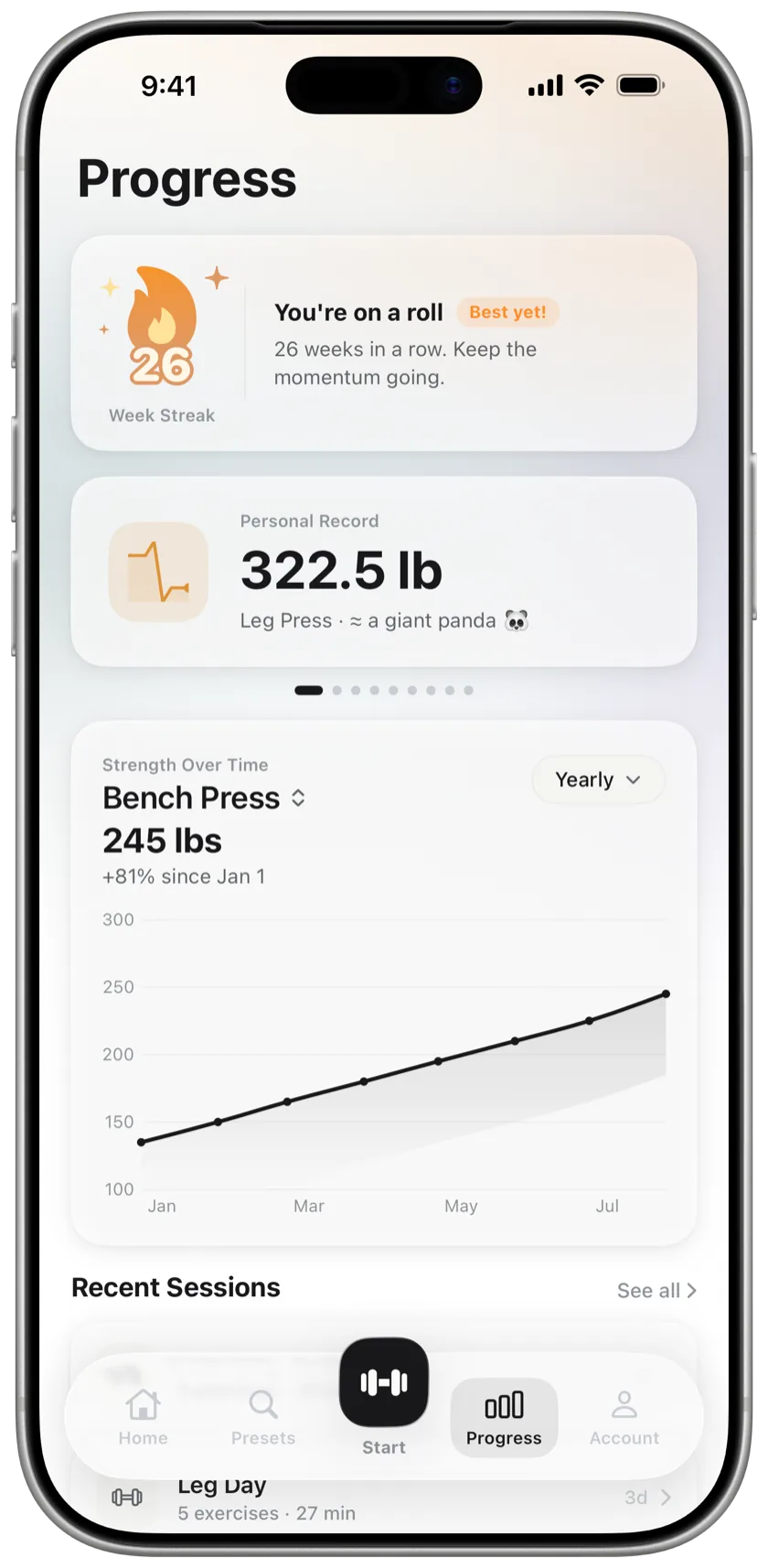
Walk into any gym and you'll see two kinds of lifters. Both show up consistently. Both work hard. But a year later, one is lifting meaningfully heavier weights and the other is repeating the same workout they did last spring.
The difference usually isn't genetics, programming, or effort. It's that one of them knows exactly what they did last session and the other is going from feel.
Memory is a terrible training partner
Research on self-reporting is consistent: people misremember their own performance, and almost always in a flattering direction. In the gym that plays out as:
- Rounding "6 reps at 165" up to "8 reps at 170" in your head
- Forgetting the back-off sets entirely and only remembering the top set
- Confusing what you did last week with what you did last month
None of this is lying. It's just how memory works. But it means "beat last time" is impossible when last time is a blur.
What tracking actually buys you
Honest baselines. A logged number can't inflate itself. When every set is recorded, the target for today is a fact, not a feeling.
Visible trends. A single workout tells you almost nothing. Twelve weeks of data tells you which lifts are climbing, which have stalled, and whether that new routine is actually working.
Motivation that compounds. A PR you can see - this set, today, better than ever before - is one of the most reliable motivators in training. Streaks work the same way: consecutive weeks of showing up, counted, is momentum you can look at.
Make tracking effortless, or it won't happen
The catch: tracking only works if you do it every session, and most tracking is tedious enough that people quit within weeks. That's the problem Gainmo obsesses over. Your previous numbers are pre-filled, logging a set takes two taps, and the lock screen shows your session at a glance, so the tracking happens inside the rest you're already taking.
Start logging, give it a month, and watch what happens when "beat last time" becomes a number instead of a vibe.